A rule nobody has to remember
Hand the analyzer one file and it answers with what it can prove: the rule that broke, the line it broke on, and why that rule is there. The same answer in your browser and in the client that writes your code.
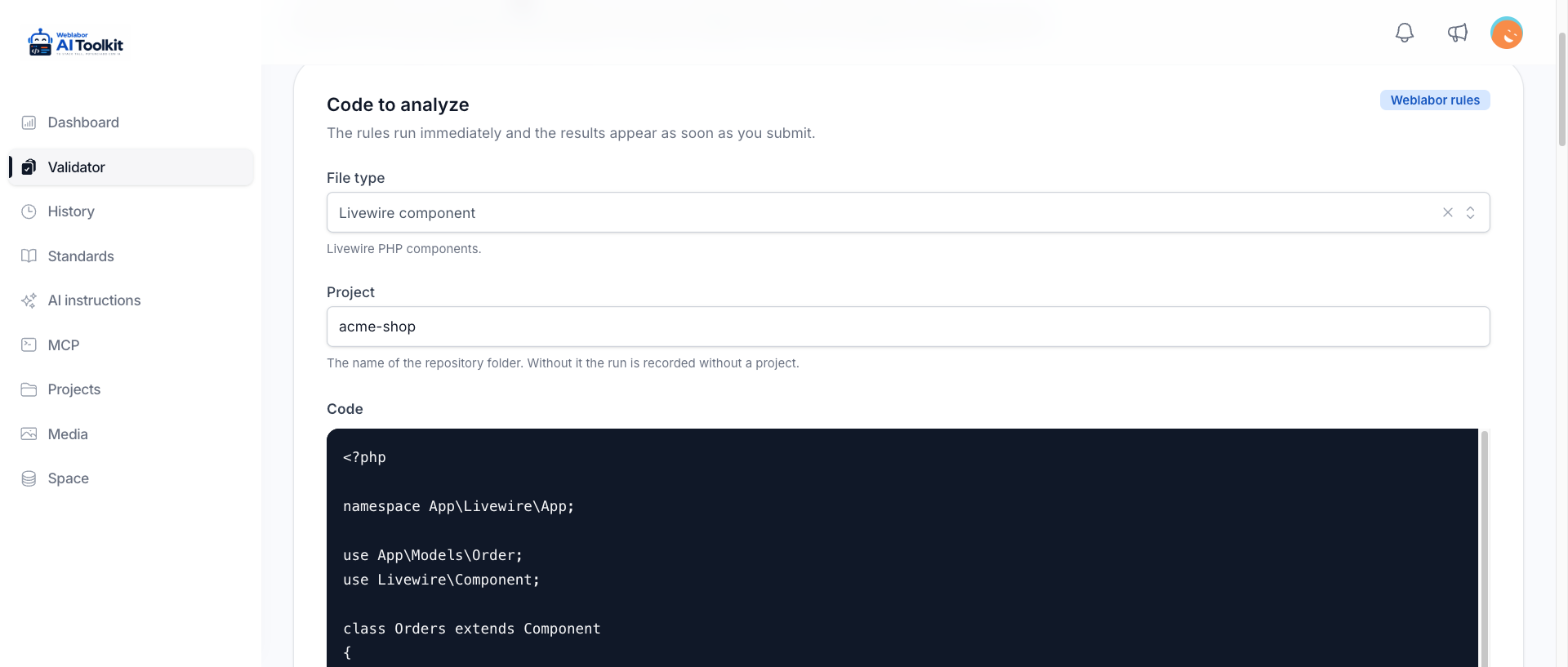
A check that runs instead of a rule somebody remembers
Give it a file and it tells you which rules it broke. Nothing depends on whoever is reviewing having read the standard that morning.
How to analyse a file →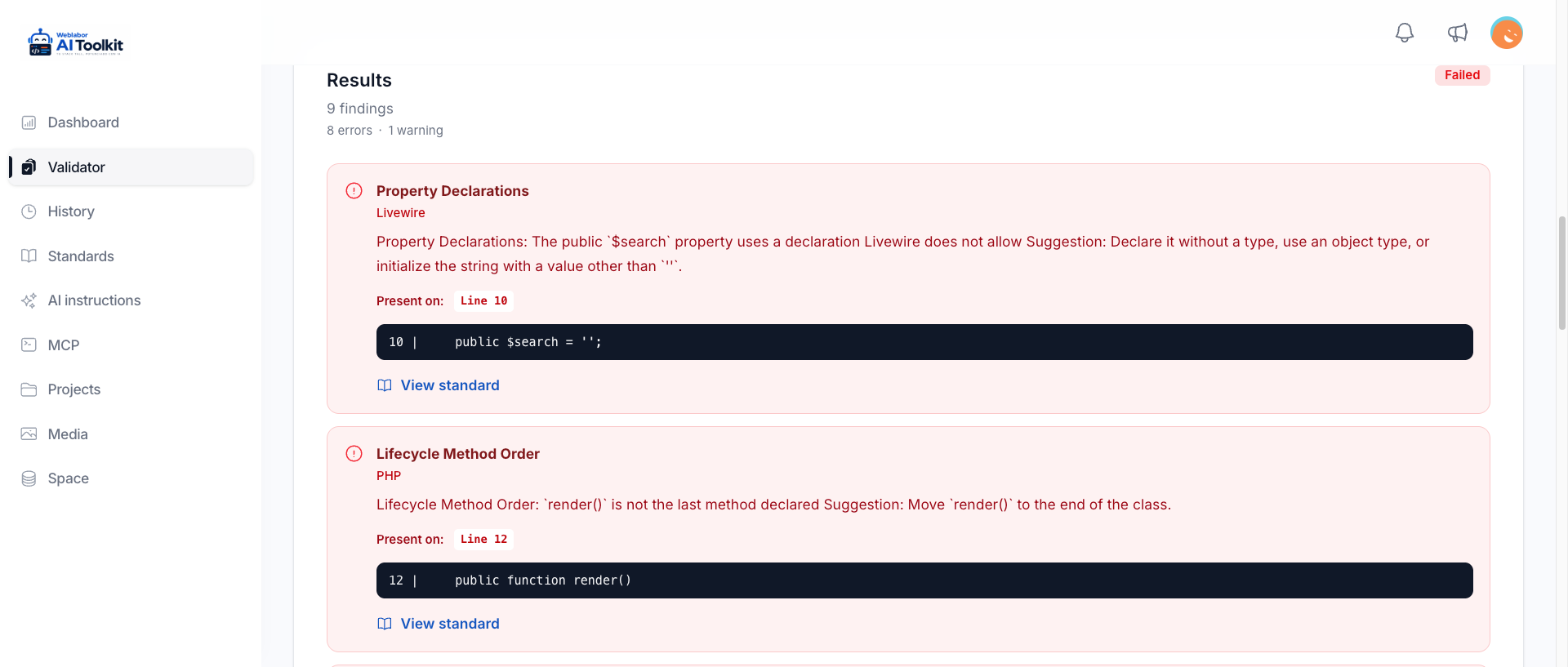
The line the problem is on
A finding points at the line, not at the file. You go straight to it instead of reading the whole thing wondering which part was meant.
How to read a finding →Never a verdict without its reason
Every finding says what to review and why the standard exists. Being told that something is wrong, with no reason attached, teaches nothing and leaves you no way to disagree.
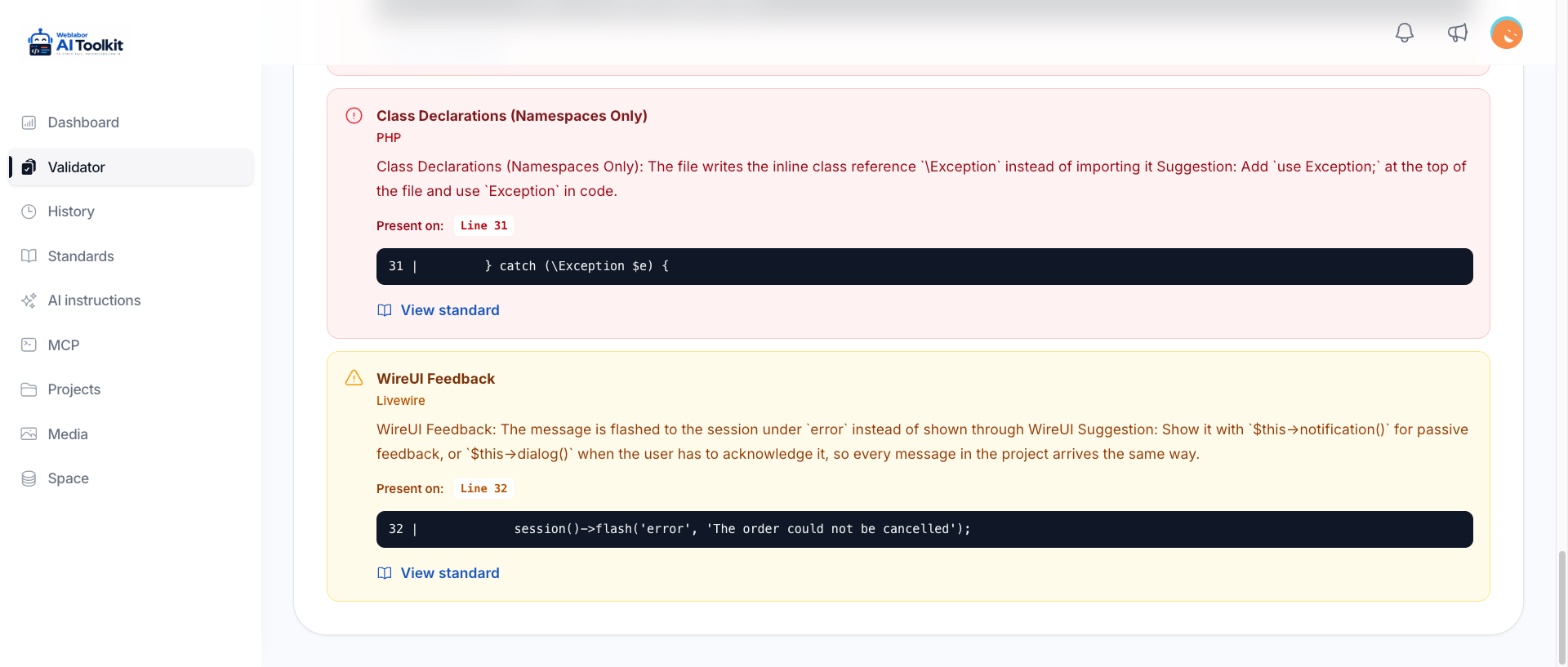
Errors and warnings kept apart
An error is a rule broken, and it is fixed. A warning is something a person has to weigh up, and it stays a decision instead of turning into a rewrite nobody asked for.
It works out what kind of file it got
You classify nothing. A Livewire component, a Blade view, a model, a migration, a trait or a list of Tailwind classes is recognised from the path and the content, and only the rules that fit are run.
The same answer in the browser and in your editor
The web and your AI client run the one analyzer. If the two ever gave different verdicts on the same file, the standard would have stopped being a standard, so they are built to give one.
Your assistant checks its own work before you see it
Connected to the server, it validates the file it just wrote and fixes what comes back. What reaches you has already been through the rules once.
It never reads your disk
The path and the content travel in the request and nothing else does. The server never goes looking through your machine for something you did not hand it.
What it cannot check, said out loud
Some things cannot be proven from a single file: whether that markup already exists as a component, whether a class name still matches what is inside it. Those are named and handed to the instructions your assistant follows, rather than quietly counted as covered.
What the analyzer cannot check →A review by eye is never presented as an analysis
When the analyzer could not run, you are told so. What a person or an assistant looked over by hand is reported as exactly that, and never as a clean pass.